
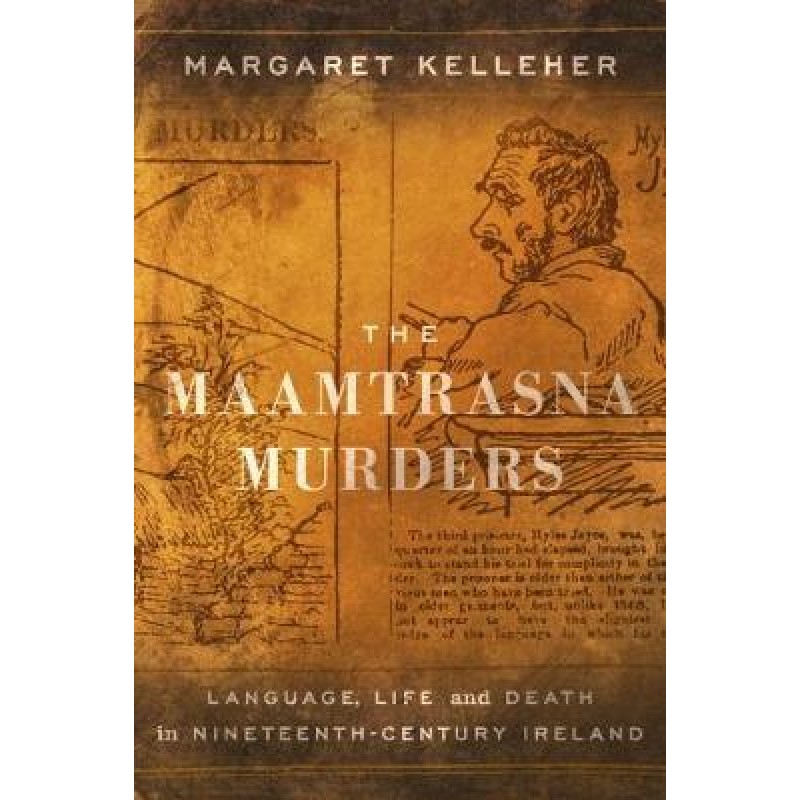

Description
The Maamtrasna Murders: Language, Life and Death in Nineteenth-Century Ireland by Margaret Kelleher is a major work of Irish legal and social history published by University College Dublin Press in 2018.
The book re-examines the brutal 1882 killings of five members of the Joyce family in Maamtrasna, County Galway, and the controversial trials that followed. Several local men were convicted, and three were executed, in what is widely regarded as one of the most serious miscarriages of justice in Irish history.
A central focus of Kelleher’s study is the role of language and translation in the Irish legal system. Many of the accused were monoglot Irish speakers, yet their trial was conducted in English, with inconsistent interpretation. The book demonstrates how linguistic barriers, miscommunication, and institutional bias contributed directly to wrongful convictions and flawed legal proceedings.
Rather than treating the case as an isolated event, Kelleher places it within the wider context of nineteenth-century Ireland, exploring rural poverty, social tension, colonial administration, and the rapid decline of the Irish language. She shows how the Maamtrasna case reflects broader patterns of inequality where language determined access to justice and shaped how testimony was understood and recorded.
The book also examines the afterlives of the case, including its influence on Irish cultural memory, journalism, literature, and later political discourse. The execution of Myles Joyce, in particular, became a symbol of injustice rooted in linguistic exclusion, later acknowledged in public commemorations and historical reassessments.
Drawing on court records, newspapers, census data, and previously underused archival material, Kelleher reconstructs both the events and the interpretive failures surrounding them. She also engages with broader questions about translation, power, and identity, showing how language functions as a decisive force in law and history.
This work is both a detailed case study and a wider reflection on how justice systems operate in multilingual societies, making it essential reading for understanding Irish history and legal culture in the nineteenth century.




Reviews
There are no reviews yet.