
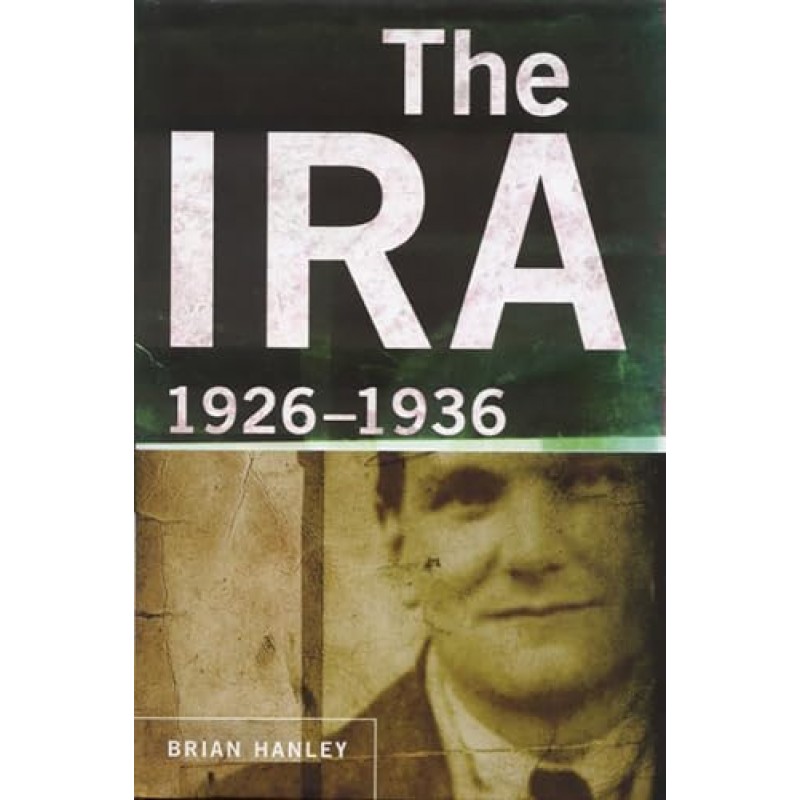

Description
The tumultuous decade following the Civil War required the IRA to reinvent its political stance, military structure, and community standing amid rapid state stabilization. The IRA 1926-1936 delivers a thorough, data-driven institutional audit tracking the strategic interactions between revolutionary leadership, clandestine arms networks, and the evolving political landscape of the Irish Free State.
The text looks deeply into declassified intelligence files, internal organization meeting minutes, and newspaper records to evaluate the practical functional operations of the IRA during this high-stakes period of ideological transition. The authors systematically guide advanced researchers through complex debates tracking membership shifts, tactical training changes, and the friction between republicanism and constitutional politics, skipping rhetorical padding for direct, high-impact historical analysis. This authoritative book stands as a mandatory manual for political science tracks, military history researchers, and university archive collections globally.
Critical military and political frameworks evaluated within this study:
Institutional Organization Analytics: Breaks down specific membership movement counts, internal command structure variations, and tactical engagement logs.
Socio-Political Context Mapping: Documents the intense strategic tension between revolutionary aspirations, state police surveillance, and shifting societal support for illegal military movements.
Gold-Standard Scholarly Quality: Meticulously annotated with extensive primary archive texts, internal document appendices, and deep peer-reviewed indices.





Reviews
There are no reviews yet.