
Description
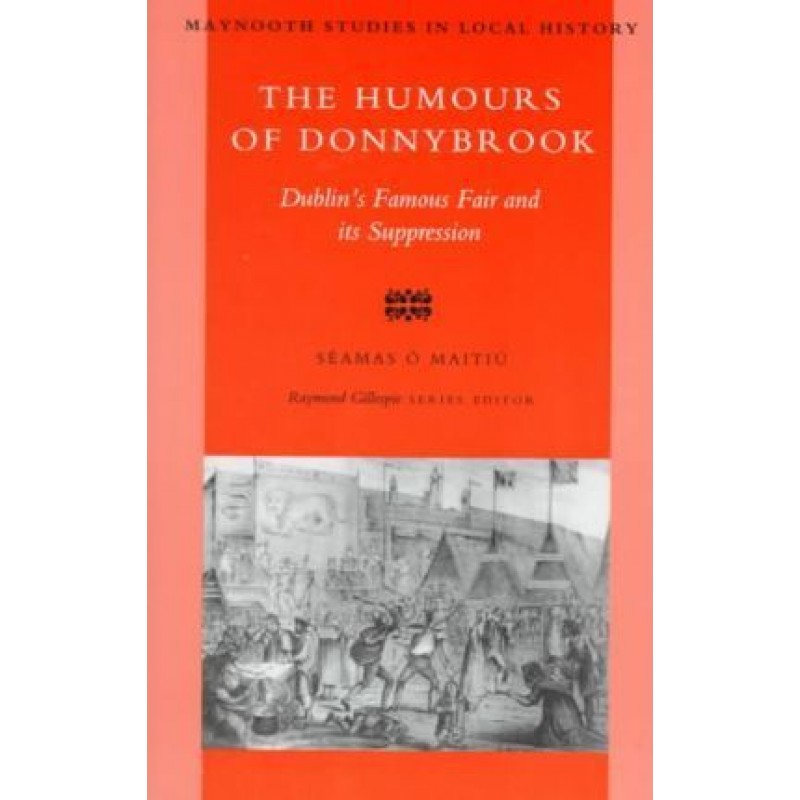
The Humours of Donnybrook: Dublin’s Famous Fair and Its Suppression by Séamas Ó Maitiú is a landmark local history study published in 1995 by Irish Academic Press as part of the Maynooth Studies in Local History series.
The book examines the rise and decline of Donnybrook Fair, a major annual event held in Dublin from the medieval period until its suppression in the mid-19th century (1860s). Originally granted by royal charter, the fair became famous for its mix of trade, entertainment, drinking, sport, music, and public spectacle, attracting visitors from across Ireland and beyond.
Ó Maitiú traces how the fair evolved from a regulated commercial market into a highly popular and often chaotic social event, known for its lively atmosphere, performances, and unruly behaviour. It became deeply embedded in Dublin culture, even giving rise to the phrase “the humours of Donnybrook,” referring to disorderly fun and rowdy behaviour.
The book also explores the gradual decline of the fair as attitudes toward public order, morality, and urban regulation changed in 19th-century Dublin. Reformers, civic authorities, and church figures increasingly viewed the fair as incompatible with modern city life, leading to its eventual suppression.
Key themes include:
- Origins and medieval development of Donnybrook Fair
- Popular culture, entertainment, and street life in Dublin
- Social class interaction at public fairs and markets
- Drinking culture, music, sport, and informal economy
- Public disorder and perceptions of “licensed chaos”
- Urban reform movements in 19th-century Dublin
- The decline and eventual suppression of traditional fairs
- Cultural memory and legacy of Donnybrook in Irish identity
Drawing on newspapers, civic records, and cultural sources, the author reconstructs how Donnybrook Fair functioned as both an economic marketplace and a social spectacle. It was a space where different social groups interacted freely, often leading to a reputation for exuberance and disorder.
The study places the fair within the wider transformation of Dublin from a semi-medieval city of seasonal fairs into a modern regulated capital. It also highlights how Donnybrook’s legacy survives in Irish cultural memory, particularly in language, song, and historical imagination.
Written in a clear academic style, the book remains an important reference for understanding Irish social history, urban culture, and the evolution of public festivals in Dublin.

Reviews
There are no reviews yet.