Description
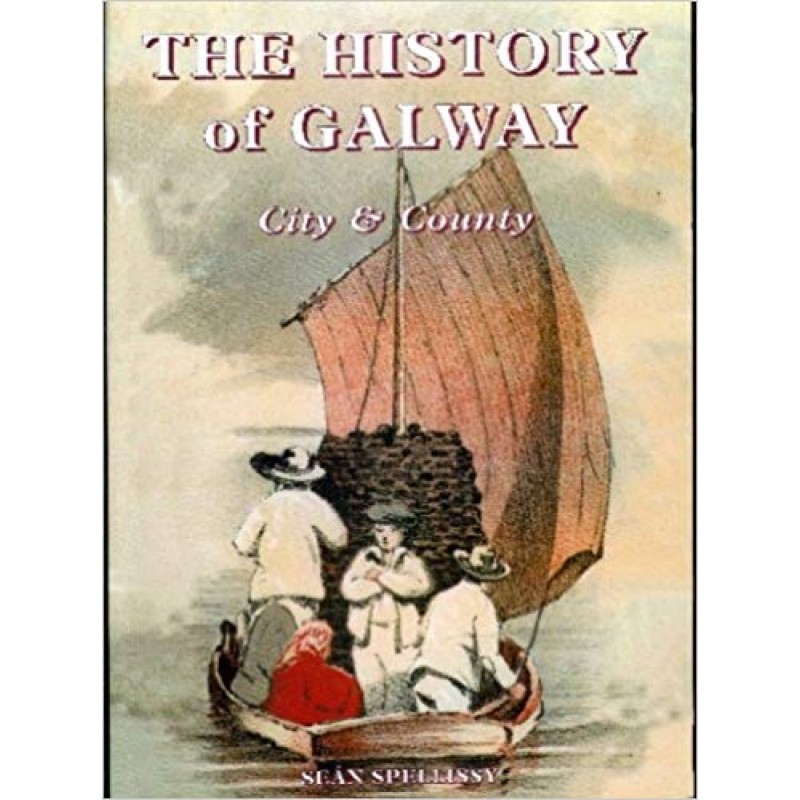
The History of Galway: City and County by Sean Spellissy is a detailed historical survey first published in 1999 by The Celtic Bookshop. It is widely regarded as one of the more accessible modern syntheses of Galway’s long and complex history, covering both the urban development of Galway City and the broader historical evolution of County Galway.
The book traces the story of Galway from its early prehistoric settlements and Gaelic tribal structures, through the arrival of the Normans in the 12th century, and into its development as a major medieval port city dominated by merchant families known as the “Tribes of Galway.” It follows the city’s transformation through centuries of trade, conflict, and cultural exchange.
A significant portion of the book focuses on Galway’s political and economic development, including its role as a western trading hub connected to Spain and continental Europe. It also explores the impact of English administration, shifting land ownership patterns, and the gradual integration of Galway into wider Irish governance structures.
The author also examines major historical disruptions, including the 17th-century wars, Penal Laws, and the catastrophic effects of the Great Famine in the 1840s, which led to severe population decline and long-term economic hardship in the region.
Key themes include:
- Early Gaelic tribes and medieval settlement patterns in Galway
- Norman invasion and the rise of the merchant “Tribes of Galway”
- Galway’s role as a transatlantic and European trading port
- Religious, political, and colonial transformation in the early modern period
- The impact of the Penal Laws on Irish Catholic society
- The Great Famine and its demographic consequences
- 19th and 20th-century modernization and urban development
- Cultural identity and regional heritage of Galway
Spellissy’s work places Galway within the broader context of Irish national history while maintaining a strong regional focus. It highlights how geography, trade routes, and political control shaped Galway’s identity as both a city and a county with distinct but interconnected histories.
The book is structured as a chronological narrative supported by historical interpretation, making it useful for general readers, students of Irish history, and those interested in regional studies. It provides a broad overview rather than highly specialised archival analysis, making Galway’s complex past accessible to a wide audience.
Overall, The History of Galway: City and County serves as a key reference for understanding the development of one of Ireland’s most historically significant western regions, combining urban, rural, and cultural history into a single coherent account.
Only logged in customers who have purchased this product may leave a review.




Reviews
There are no reviews yet.