Description
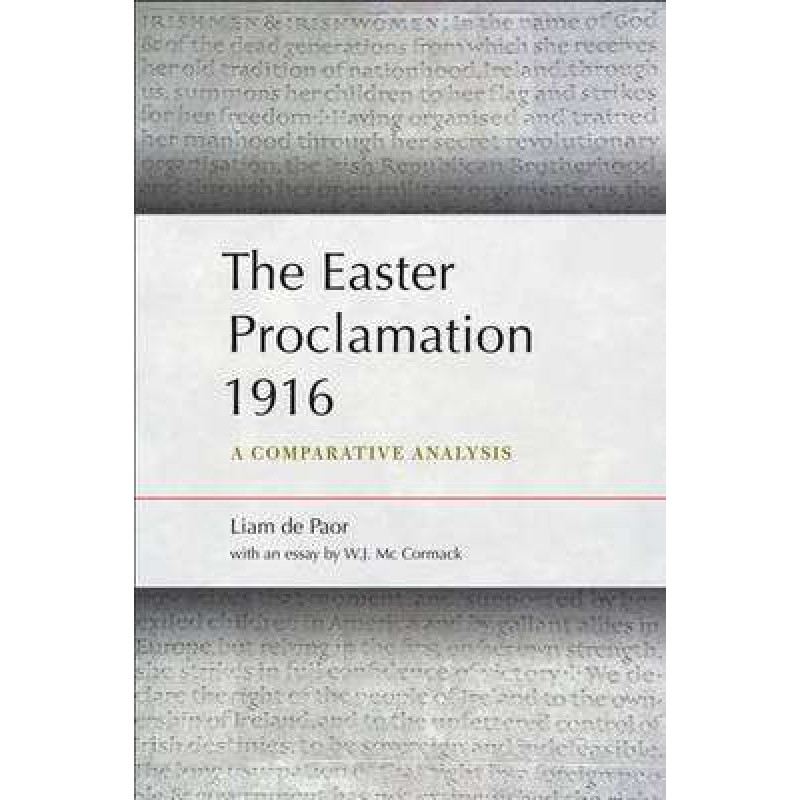
The Easter Proclamation remains the foundational document of modern Irish statehood, demanding a rigorous comparative study of its revolutionary messaging and intellectual antecedents. The Easter Proclamation 1916: A Comparative Analysis delivers a thorough, data-driven audit tracking the text’s composition, its place within global revolutionary rhetoric, and its enduring influence on political thought.
The volume looks deeply into historical drafts, contemporary propaganda archives, and political commentary to evaluate the practical functional operations of this document in inciting and shaping the 1916 Rising. The authors systematically guide advanced researchers through complex debates regarding the proclamation’s ideological claims and its impact on later Irish political discourse, skipping rhetorical padding for direct, high-impact critical analysis. This authoritative volume stands as a mandatory reference cornerstone for university history tracks, political science researchers, and serious collectors of Irish revolutionary heritage.
Core academic and political frameworks explored within this study:
-
Rhetorical and Comparative Analytics: Breaks down specific linguistic choices, ideological influences, and the document’s comparative role in broader global revolutionary movements.
-
Socio-Political Context Mapping: Documents the intense structural tension between the revolutionary intent of the authors, public reception, and the long-term state-building impact.
-
Gold-Standard Scholarly Quality: Meticulously annotated with extensive primary research, comparative analysis charts, and deep peer-reviewed perspectives.
Only logged in customers who have purchased this product may leave a review.







Reviews
There are no reviews yet.