Description
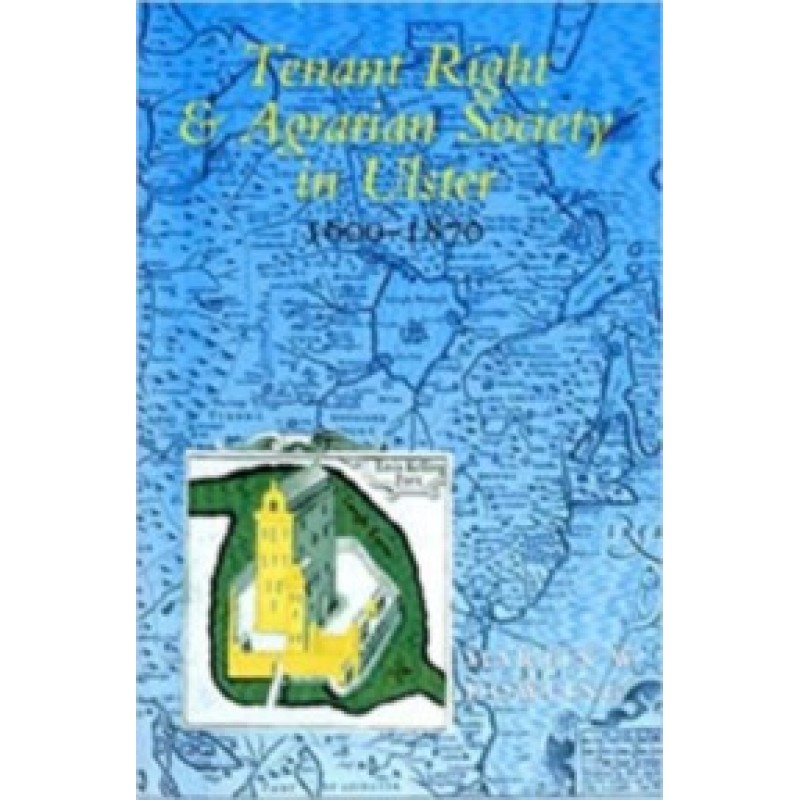
Tenant Right and Agrarian Society in Ulster, 1600–1870 by Martin W. Dowling is a major work of Irish social and agrarian history, published by Irish Academic Press in 1999. Based on the author’s doctoral research and extensive archival investigation, the book is widely regarded as the definitive study of the Ulster Custom—the unique system of tenant right that shaped rural society in Ulster for more than 250 years.
Drawing on the records of more than sixty landed estates, Dowling reconstructs the changing relationship between landlords, tenants, estate managers, and rural communities from the Plantation of Ulster in the early seventeenth century through to the eve of the Irish Land Acts. Rather than viewing tenant right purely as a legal or economic arrangement, he demonstrates how it developed as a complex social institution influenced by custom, politics, religion, and local tradition.
The book explains how tenant right allowed outgoing tenants to claim compensation or payment for the value of their interest in a holding, creating a distinctive form of customary property rights that often existed alongside formal landlord ownership. Dowling explores how this system contributed to Ulster’s comparatively stable agricultural economy while also generating disputes over ownership, improvements, and inheritance.
Key Themes
- The origins and evolution of the Ulster Custom
- Landlord and tenant relationships in early modern Ireland
- The Plantation of Ulster and colonial settlement
- Agrarian capitalism and rural economic change
- Estate management and land administration
- Protestant and Catholic rural communities
- Agricultural improvement and changing farming practices
- The Irish land question before the Land War
Throughout the book, Dowling places tenant right within the broader transformation of Irish rural society, examining how economic modernization, population growth, industrial development, and political change reshaped traditional agricultural relationships. He also investigates the role of customary law, local negotiation, and social expectations in maintaining tenant security despite the absence of formal legal protection for much of the period.
Praised by leading historians as the definitive treatment of the Ulster Custom, the book has become an essential reference for understanding Irish agrarian history. Its combination of detailed archival research and innovative historical interpretation has made it a foundational work in studies of Irish land tenure, rural society, and the origins of the nineteenth-century land question.
Only logged in customers who have purchased this product may leave a review.




Reviews
There are no reviews yet.