
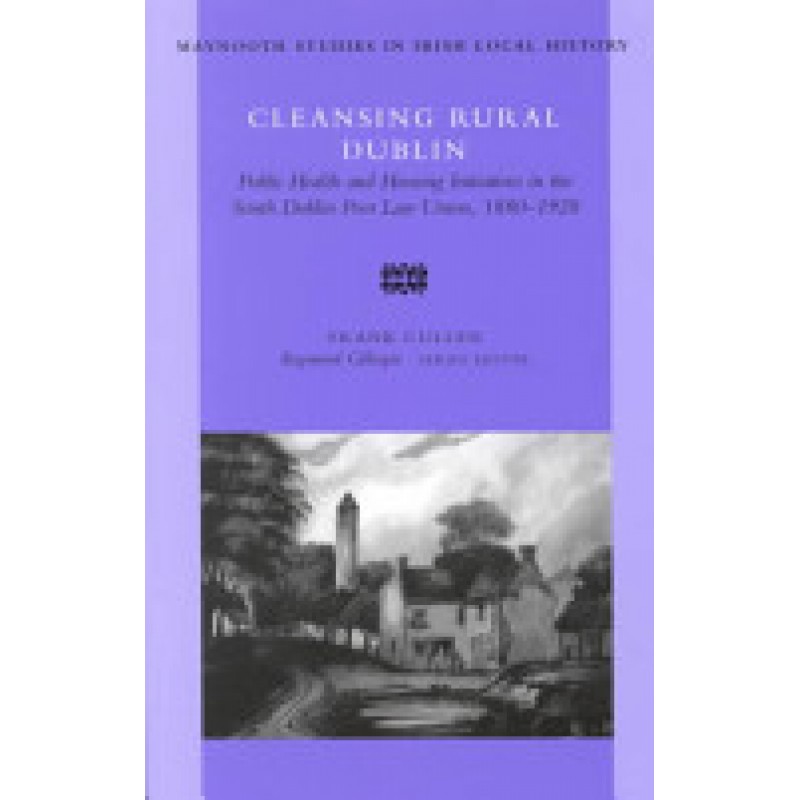

Description
At the turn of the 20th century, the battle against infectious disease, poor sanitation, and overcrowded tenement living was fought not just in the city center, but across the rural and suburban fringes of the county. Cleansing Rural Dublin – Public Health and Housing Initiatives in the South Dublin Poor Law Union, 1880-1920 delivers a thorough, highly accurate administrative and social history of this critical transition era.
The text looks deeply into the functional operations of the South Dublin Poor Law Union, analyzing how local guardians, medical officers, and sanitary inspectors systematically worked to build clean laborer cottages, install proper sewerage systems, and manage outbreaks of typhus and tuberculosis. Utilizing original board minutes, medical logs, and housing committee registries, the book tracks the complex funding battles between local authorities and the state. It stands as an absolute necessity for social policy researchers, Dublin history collectors, and urban geographers.
Core administrative insights highlighted in this work:
Sanitation and Infrastructure Audits: Documents specific historic drainage, water supply, and disinfection campaigns rolled out across South Dublin.
Laborer Cottage Development: Details the architectural layouts, construction budgets, and tenant selection criteria for early municipal housing projects.
Elite Scholarly Standard: Meticulously annotated with extensive primary citations from parliamentary papers, local council logs, and medical archives.








Reviews
There are no reviews yet.