Description
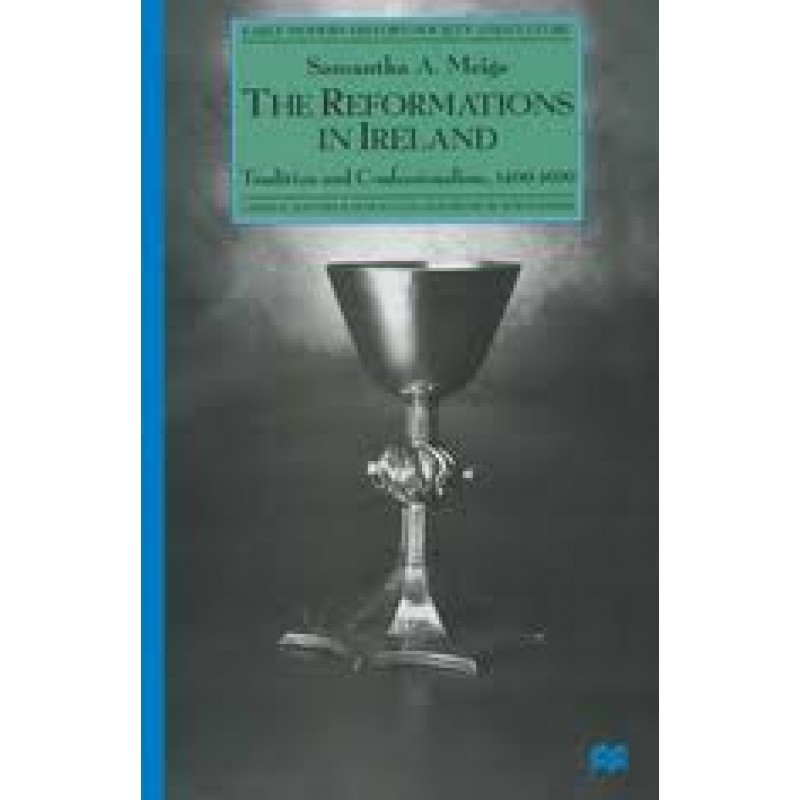
The Reformations in Ireland: Tradition and Confessionalism, 1400–1690 by Samantha A. Meigs is a groundbreaking study of one of the most distinctive developments in European religious history. Published by Gill & Macmillan in 1997, the book examines why Ireland was the only region in Europe to largely resist a state-sponsored Protestant Reformation and retain a predominantly Catholic identity despite sustained political and religious pressure.
Rather than explaining this outcome solely through politics or military conflict, Meigs argues that the resilience of Irish Catholicism was rooted in a unique alliance between the institutional Church and the traditional Gaelic social order. Drawing on an impressive range of sources—including Gaelic poetry, devotional literature, saints’ lives, bardic writings, ecclesiastical records, and Jesuit correspondence—she demonstrates how Ireland’s cultural traditions reinforced religious identity during a period of profound change.
The book explores a wide range of topics, including:
- The religious landscape of late medieval Ireland
- The role of the bardic tradition in preserving faith and culture
- Gaelic devotional literature and the cult of the saints
- The structure of the pre-Reformation Irish Church
- The rise and decline of Protestantism in Ireland between 1534 and 1603
- The Catholic Counter-Reformation and the emergence of a confessional Church
- Religious life among Ireland’s Gaelic and Old English elites
- The transformation of Irish religious practices during the seventeenth century
Meigs places Ireland within the broader European context of the Reformation and Counter-Reformation while highlighting the country’s unique historical experience. She argues that traditional Gaelic culture provided a powerful framework through which Catholicism adapted and survived, making religion an important element of Irish identity long before the emergence of modern nationalism.
Part of the Early Modern History: Society and Culture series, the book combines religious history with cultural, literary, and social analysis. Its interdisciplinary approach makes it valuable not only for historians of Ireland but also for readers interested in European Reformation studies, cultural history, and the relationship between religion and identity. The volume includes extensive bibliographical references and an index to support further research.
Ideal for readers interested in Irish history, the Reformation, early modern Europe, religious studies, Gaelic culture, and church history, The Reformations in Ireland: Tradition and Confessionalism, 1400–1690 remains an influential and authoritative examination of one of Ireland’s defining historical developments.
Only logged in customers who have purchased this product may leave a review.

Reviews
There are no reviews yet.