
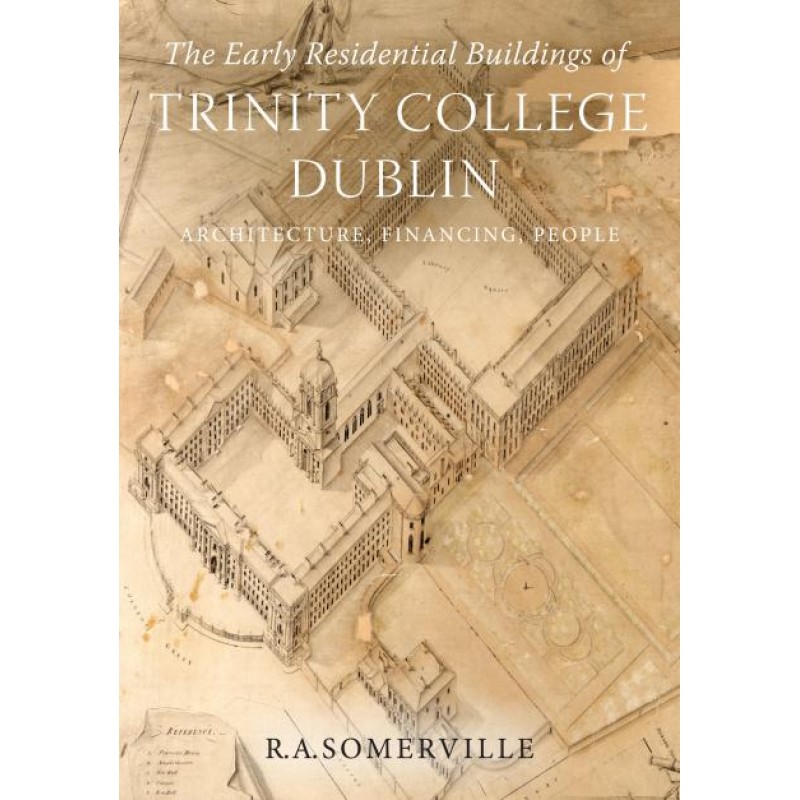

Description
The evolution of Trinity College Dublin’s physical campus reflects not only architectural trends but also the complex, high-stakes history of institutional financing and academic life. The Early Residential Buildings of Trinity College Dublin: Architecture, Financing, People delivers a thorough, data-driven institutional audit tracking the construction timelines, funding models, and the lives of those who occupied these early spaces.
The text looks deeply into college bursar records, original architectural blueprints, and student archival registries to evaluate the practical functional operations of university campus development. The authors systematically guide advanced researchers through complex historical debates tracking how economic constraints and pedagogical needs shaped the college’s physical environment, skipping rhetorical padding for direct, high-impact institutional analysis. This authoritative book stands as a mandatory manual for architectural historians, university archive researchers, and Irish education history collections.
Critical architectural and institutional frameworks evaluated within this study:
Structural and Fiscal Analytics: Breaks down specific construction cost metrics, building style shifts, and institutional financing sources.
Socio-Historical Context Mapping: Documents the intense structural tension between administrative academic goals, construction realities, and the daily lives of residents.
Gold-Standard Scholarly Quality: Meticulously annotated with extensive primary archive texts, floor-plan reproductions, and deep peer-reviewed indices.





Reviews
There are no reviews yet.