

Description
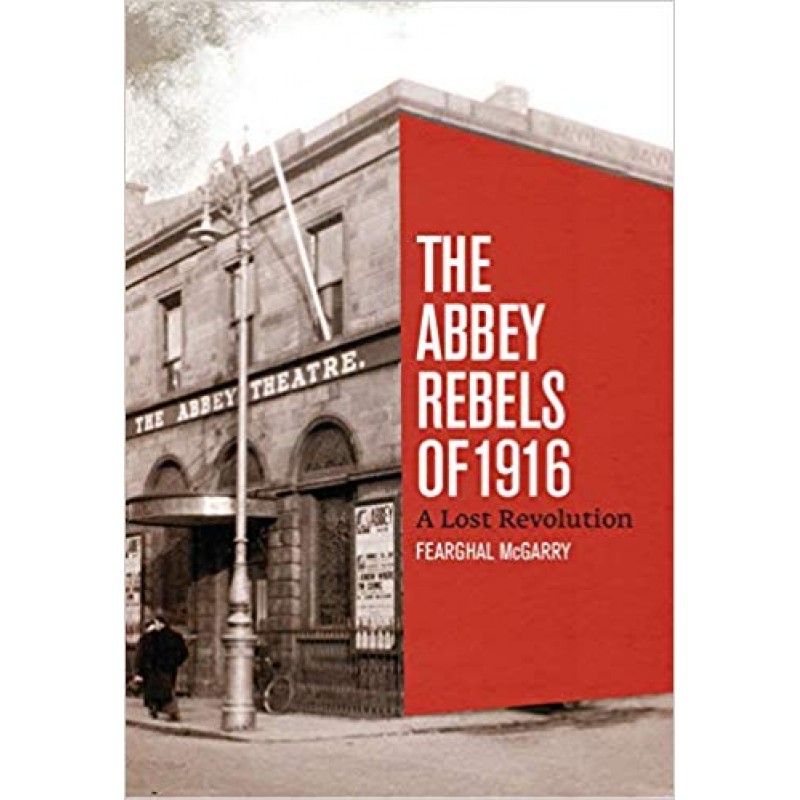
The Abbey Rebels of 1916: A Lost Revolution by Fearghal McGarry is a major work of Irish revolutionary history published in 2015 by Gill & Macmillan. The book examines the lives of seven individuals associated with the Abbey Theatre who took part in the Easter Rising of 1916, using their personal stories to reassess the relationship between Irish cultural nationalism and revolutionary politics.
The study challenges the idea that the Abbey Theatre was simply a cultural backdrop to revolution, instead showing it as part of a wider network of political and social radicalisation in early 20th-century Dublin. McGarry draws extensively on Bureau of Military History records, pension files, and personal testimonies to reconstruct the lived experiences of these figures.
The individuals studied include:
- Seán Connolly – the first rebel killed in the Rising
- Máire Nic Shiubhlaigh – Abbey Theatre leading actress and nationalist activist
- Helena Molony – feminist activist and revolutionary organiser
- Peadar Kearney – songwriter of “Amhrán na bhFiann” (Irish national anthem)
- Barney Murphy – carpenter and theatre worker
- Ellen Bushell – usherette involved in covert nationalist activity
- Arthur Shields – actor who later gained international recognition
A central argument of the book is that cultural institutions like the Abbey Theatre played an indirect but important role in shaping revolutionary consciousness, even if they were not formal political organisations.
McGarry also explores what happened after 1916, showing how many of these individuals struggled in the post-revolutionary Irish Free State, where ideals of equality and social transformation often gave way to conservative governance and uneven recognition of revolutionary contributions.
Key themes:
- Abbey Theatre and Irish cultural nationalism
- Personal biographies of 1916 participants
- Radicalisation through art, politics, and social networks
- Memory, commemoration, and historical revision
- Gender roles in revolutionary Ireland
- Post-1916 political disillusionment
- Relationship between culture and armed rebellion
The book is richly illustrated and widely regarded as an important contribution to the study of the Irish Revolution, cultural history, and memory studies, offering a human-scale perspective on one of Ireland’s most defining historical events.
Reviews
There are no reviews yet.