

Description
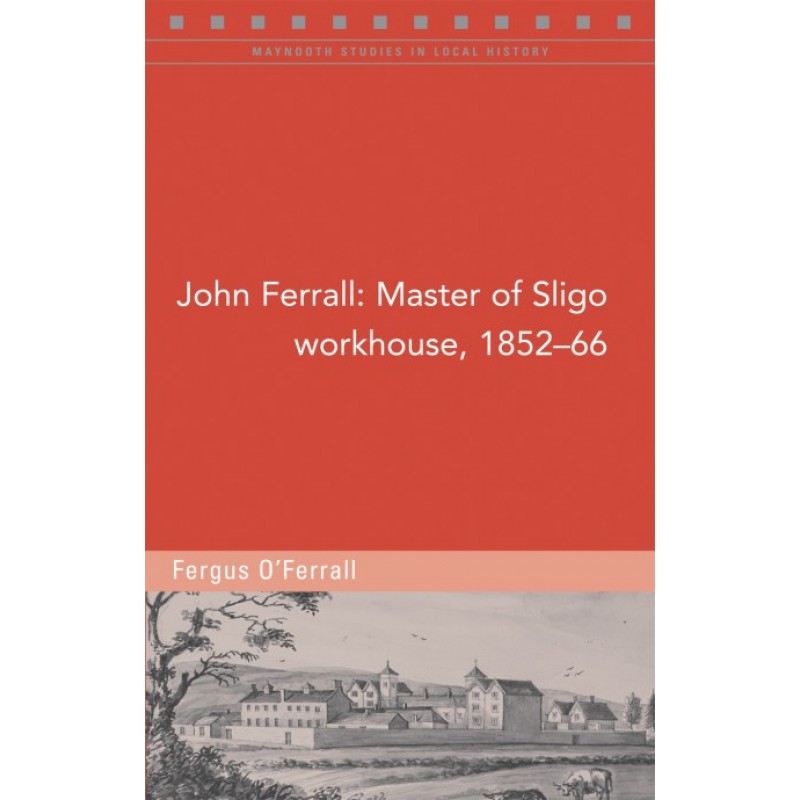
In the grim, difficult decades following the Great Famine, the local workhouse served as the absolute center of survival and state welfare for thousands of destitute families. John Ferrall; Master of Sligo Workhouse, 1852-66 delivers a thorough, highly accurate historical investigation into the daily management of this crucial mid-Victorian institution.
Utilizing complete, newly examined Poor Law union minute books, indoor relief registries, and master’s journals, the text reconstructs the daily routine managed by Ferrall. From diet scales and clothing distributions to the intense local politics of the Board of Guardians and corporate budget battles, this book strips away general assumptions to show the precise, functional realities of regional poverty management. It stands out as an invaluable reference cornerstone for local genealogists, social historians, and western heritage collectors.
Core administrative insights highlighted in this work:
Workhouse Log Audits: Features exact data tracking regarding inmate numbers, mortality rates, expenditure ledgers, and employment schemes.
Institutional Discipline Frameworks: Details the rules, segregation policies, and structural management styles deployed by the workhouse master.
Unrivaled Local Ancestry Value: Offers a unique window into the specific names, family backgrounds, and social environments of post-Famine County Sligo.
Reviews
There are no reviews yet.