Description
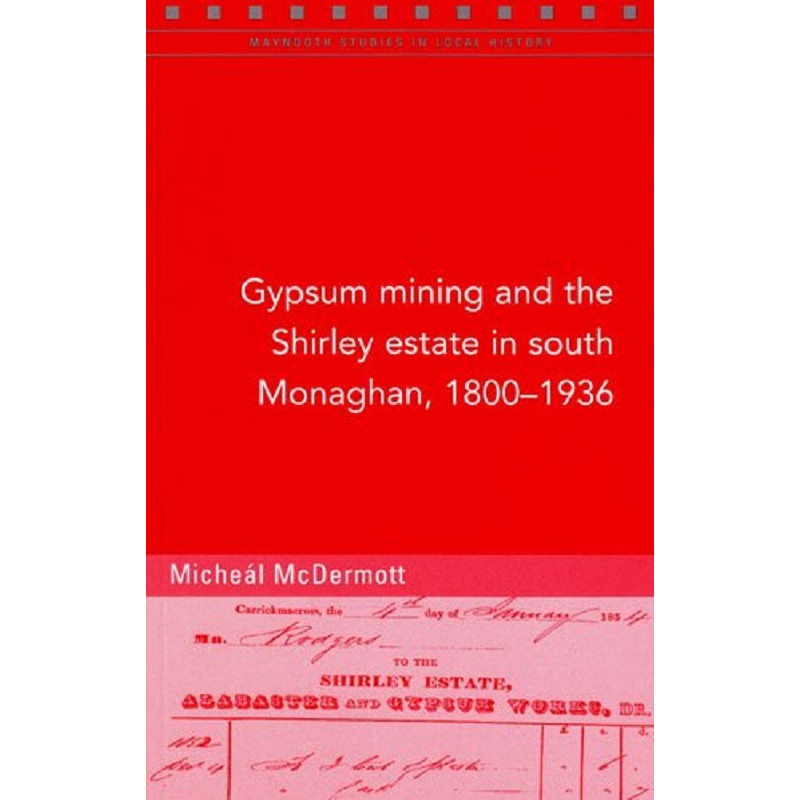
The rich mineral deposits beneath the landscape of South Monaghan birthed a highly sophisticated, multi-generational mining industry that played a vital role in Ireland’s industrial development. Gypsum Mining in South Monaghan, 1800-1936 delivers a thorough, highly accurate chronicle capturing the complete technical and social history of these mining operations.
The volume looks deeply past basic historical overviews to evaluate the practical functional operations of the industry across more than a century. The authors systematically guide readers through the engineering challenges of early open-cast extraction, the building of underground shafts, the development of processing factories in Kingscourt and Carrickmacross, and the complex railway lines designed to move materials to port. Written with direct, functional prose that skips over-complicated academic jargon, it stands out as an irreplaceable reference tool for industrial geographers, local heritage collectors, and mining history enthusiasts.
Key frameworks preserved within this industrial study:
-
Micro-Historical Operational Records: Documents specific extraction statistics, lease maps, mine company ledgers, and historic company names.
-
Socio-Cultural Labor Tracking: Preserves rare details on miner wages, working safety records, union organizing efforts, and neighborhood employment patterns.
-
Highly Scannable Reference Layout: Formatted with organized chronological chapters and clear technical summaries for low-effort historical data lookup.
Only logged in customers who have purchased this product may leave a review.











Reviews
There are no reviews yet.