

Description
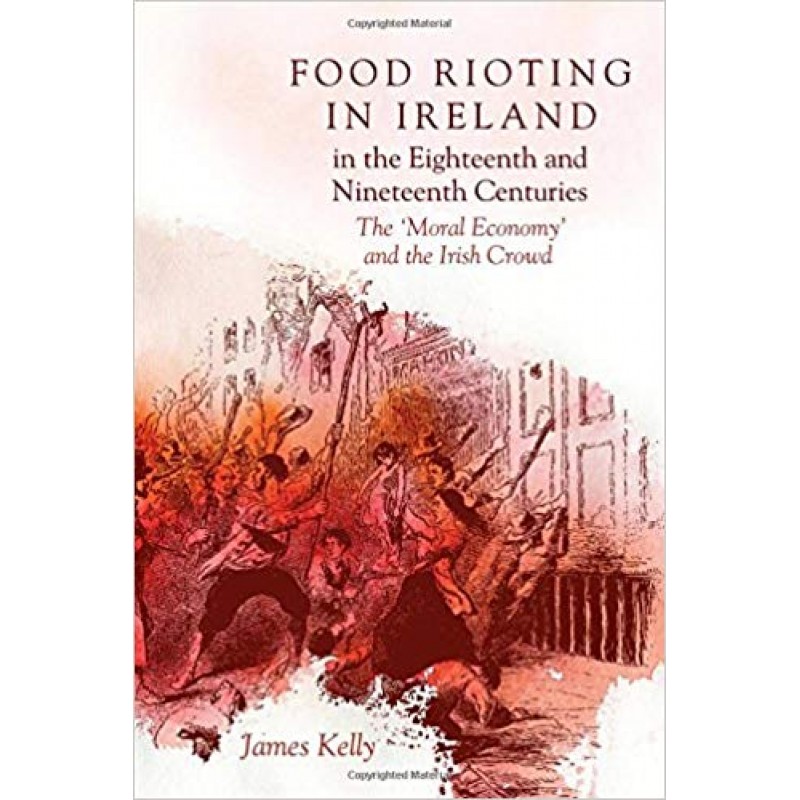
Long before the catastrophic Great Famine of the 1840s, localized food shortages regularly drove urban and rural communities to stage highly disciplined popular protests. In Food Rioting in Ireland in the Eighteenth and Nineteenth Centuries, acclaimed scholar James Kelly delivers an authoritative, data-driven analysis of how ordinary crowds enforced a “moral economy” to protect their food supplies from greedy merchants.
The volume looks deeply past simple assumptions of chaotic looting to systematically map out hundreds of recorded riots across two centuries. Kelly evaluates how communities seized grain carts, forced merchants to sell potatoes at fair regulated prices, and blocked exports at local ports. Written with absolute academic precision, the text explains how these protests operated under clear community rules of justice until the sheer scale of the 1840s crisis permanently overwhelmed traditional patterns of resistance. It is a landmark reference tool specifically built for advanced research libraries, economic historians, and sociology students.
Critical frameworks evaluated within this text:
The ‘Moral Economy’ Logic: Examines the specific ethical codes, community standards, and defensive tactics deployed by the Irish crowd to regulate markets.
State and Military Responses: Tracks the deployment of local militias, police forces, and legislative acts to suppress popular market interventions.
Gold-Standard Scholarly Quality: Extensively annotated with primary judicial transcripts, newspaper archives, state paper files, and regional demographic tables.






Reviews
There are no reviews yet.