Description
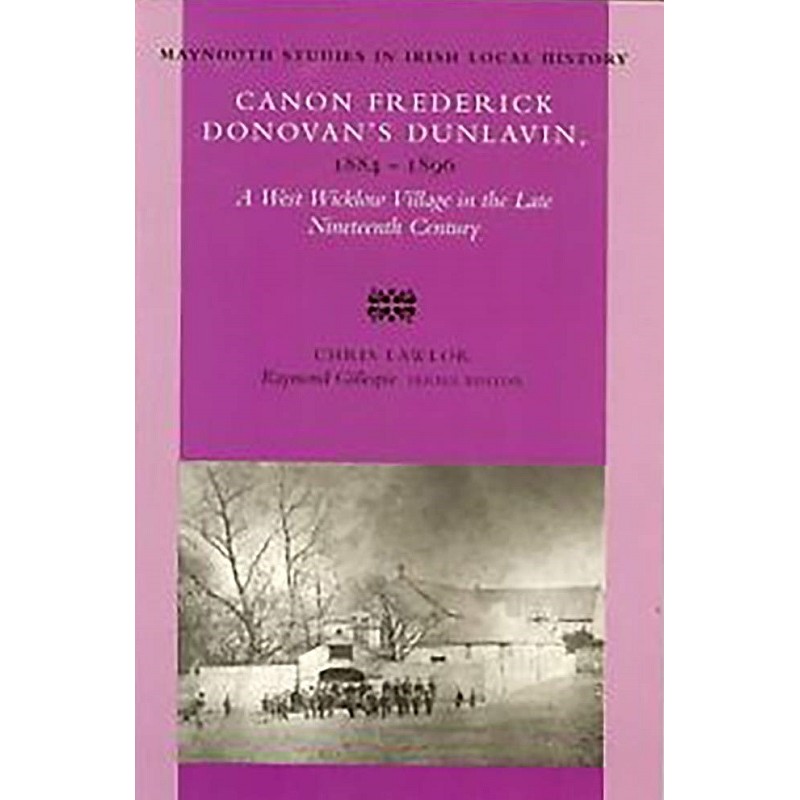
The complex socio-political history of late-Victorian Ireland is best understood by looking closely at the vibrant, localized records of its rural villages. In Canon Frederick Donovan’s Dunlavin, 1884-1896, acclaimed historian Chris Lawlor delivers a thorough, highly accurate chronicle of a West Wicklow community navigating a decade of massive national transition.
Using the meticulous records, diaries, and administrative actions of Canon Frederick Donovan as a central anchor, Lawlor look deeply into the functional operations of the local parish, school boards, and agrarian political leagues. The text guides readers systematically through the shifting dynamics between local landlords and the working population, the rise of the Gaelic Athletic Association, and the localized fallout of the Parnell split. It stands as an indispensable reference cornerstone for local history buffs, regional geographers, and genealogists tracking Wicklow roots.
Key historical frameworks explored within this text:
-
Micro-Historical Mapping: Examines the precise social interactions, commercial trades, and neighborhood networks of Dunlavin across a twelve-year span.
-
Ecclesiastical and Civic Intersections: Tracks how regional religious leaders directly influenced public education, local poor relief, and community disputes.
-
Elite Archival Precision: Heavily supported by original parish registries, contemporary newspaper records, and extensive historical notes.
Only logged in customers who have purchased this product may leave a review.








Reviews
There are no reviews yet.