Description
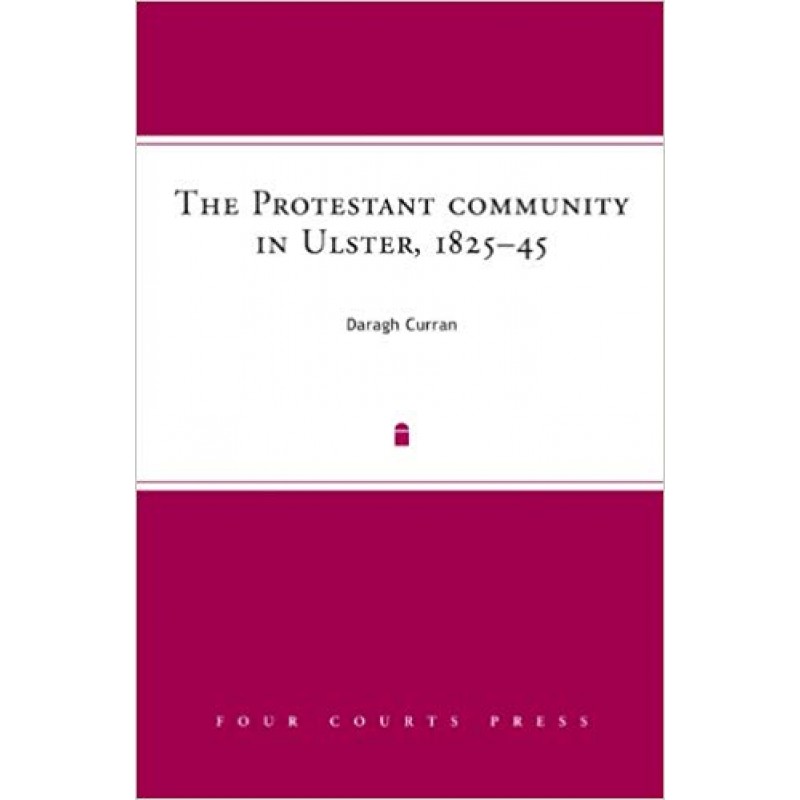
The Protestant Community in Ulster, 1825–45: A Society in Transition by Daragh Curran offers an insightful study of the profound political, economic, and social changes that affected Ulster’s Protestant population during the two decades preceding the Great Famine. Published by Four Courts Press, the book examines how a community that had long occupied a position of influence responded to a rapidly changing Ireland.
The period between 1825 and 1845 was marked by significant challenges. The decline of the linen industry, the political campaigns of Daniel O’Connell and the movement for Catholic Emancipation, together with government reforms introduced from London, created uncertainty among Protestants throughout Ulster. Curran investigates how these developments affected communities across the province, from wealthy landowners to farmers, tradesmen, and labourers.
A central theme of the book is the role of the Orange Order, which became one of the most important organisations through which Protestants expressed their political, religious, and social concerns. Rather than focusing solely on elite politics, Curran examines the experiences of ordinary people and demonstrates how associational culture shaped community identity during this period of transition.
The book explores topics including:
- The impact of political reform and Catholic Emancipation on Ulster Protestants
- Economic pressures caused by the decline of the linen industry
- The development and influence of the Orange Order
- Religious identity and interdenominational relations
- Social divisions within the Protestant community
- Rural and small-town life across Ulster before the Great Famine
- The changing balance of political power in nineteenth-century Ireland
Drawing on newspapers, organisational records, correspondence, and contemporary accounts, Curran presents a balanced and nuanced picture of Protestant society. His research moves beyond traditional political history to examine the everyday experiences, anxieties, and aspirations of the people who lived through this transformative era. The study also highlights important regional differences within Ulster, showing how communities responded in different ways to the challenges they faced.
Praised by historians as an important contribution to the study of pre-Famine Ulster, the book broadens understanding of a period often dominated by narratives centred on Catholic political mobilisation. Instead, it provides valuable insight into the social history and internal dynamics of Ulster’s Protestant population during a pivotal moment in Irish history.
Ideal for readers interested in Irish history, Ulster studies, nineteenth-century politics, religious history, social history, and the Orange Order, The Protestant Community in Ulster, 1825–45 is an authoritative and accessible examination of a society adapting to profound political and economic change.
Only logged in customers who have purchased this product may leave a review.







Reviews
There are no reviews yet.