Description
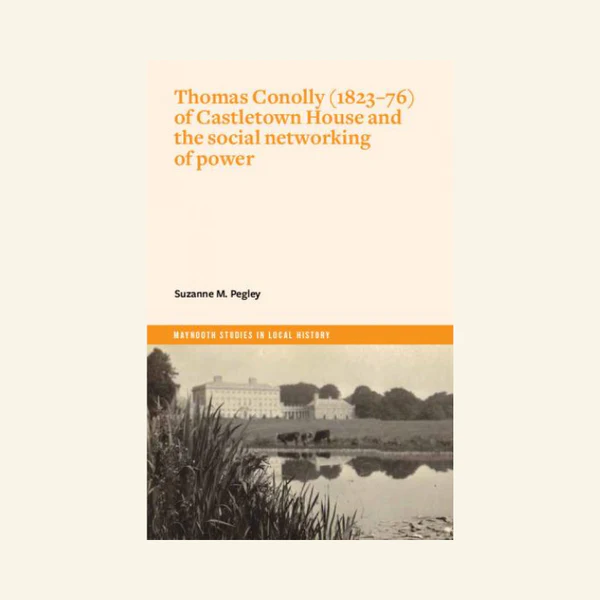
Thomas Conolly (1823–76) of Castletown House and the Social Networking of Power by Suzanne M. Pegley is a micro-historical study published by Four Courts Press as part of the Maynooth Studies in Local History series. It investigates how members of the Irish landed gentry sustained authority during a period when their political and economic dominance was gradually weakening.
At the centre of the study is Castletown House, one of Ireland’s most significant Palladian estates, used as a lens to understand how elite power operated through social interaction, mobility, and institutional connection rather than purely formal political control.
The book explores Thomas Conolly’s role within the Anglo-Irish ascendancy class, focusing on how he navigated elite society through:
- Political engagement and parliamentary connections
- Social rituals such as estates, salons, and networking events
- Family alliances and aristocratic relationships
- Participation in broader imperial and administrative structures
A key theme is the idea of “social networking of power”, where influence is maintained not only through landownership but through constant participation in overlapping elite circles across Ireland and Britain. The study situates Conolly within a wider system of mid-Victorian landowning culture, showing how demesnes like Castletown functioned as both private residences and centres of political-social coordination.
The work also reflects on the gradual decline of ascendancy dominance in the second half of the 19th century, as political reform, agrarian agitation, and changing economic conditions began to reshape Irish society. Castletown becomes symbolic of a disappearing world of aristocratic authority and estate-based governance.
Only logged in customers who have purchased this product may leave a review.








Reviews
There are no reviews yet.